

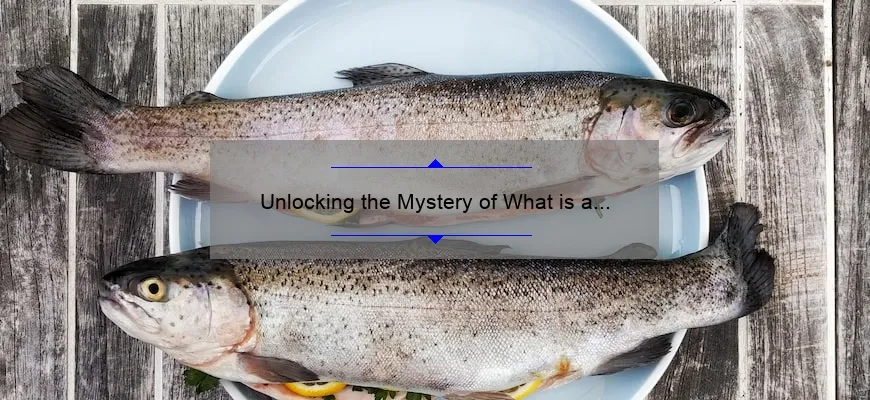
What is a Salmon?
A salmon is a type of fish found mainly in cold, freshwater streams and rivers, but can also be found in saltwater environments. Salmons are known for their unique life cycle which involves hatching from eggs then swimming downstream to the ocean where they mature into adults before returning upstream to spawn.
Must-know facts:
– Salmons are anadromous, meaning that they live part of their lives in freshwater and the other part in saltwater.
– They play a crucial role in ecosystems and food chains as both predators and prey.
– There are several different species of salmon including Chinook, Coho, Sockeye, Pink, and Chum.
Breaking it Down: How Exactly is a Salmon Defined?
There’s something quite remarkable about salmon. From its delicious taste to its vibrant color, this fish has captured the hearts of seafood enthusiasts for centuries. But what exactly makes a salmon a salmon? In this blog, we’ll break down the various elements that define this beloved species.
First and foremost, let’s talk about taxonomy. Salmon is part of the family Salmonidae which includes trout and char, among other species. Within this family there are seven different genera, each containing various subspecies of salmon: Salmo (Atlantic salmon), Oncorhynchus (Chinook/King, Coho/Silver, Sockeye/Red), Danube Redfin (Hucho hucho) and more.
From these subspecies emerge some crucial characteristics that help in identifying whether or not you’re dealing with an actual salmon:
1. Shape
As it turns out – you can judge a book by its cover…at least when it comes to identifying salmons! They have distinctive long streamlined bodies with tapered heads and fins positioned towards the rear end of their anatomy.
2. Size
The size does matter when it comes to defining a true salmon. No two types are alike but most adult salmons can range from 20 inches up to 5 feet in length if given enough time!
3.Coloration
Salmon pride themselves on their looks too! Their scales come in shades from silver/purple in fresh water environments to bright orange/red within saltwater habitats at spawning time.
4.Lifestyle
Unlike many other fish out there -salmon have unique lifestyles,it is common knowledge among scientists that they start off as freshwater dwellers ,but later venture into ocean waters where they grow bigger before coming back upstreams during maturity stage !
So next time someone asks you how do you know if your meal is truly made using wild caught Atlantic or Pacific salmon ? You’ll be just bursting with facts about your favorite dish!
Step by Step Guide to Understanding What a Salmon Is
Salmon is a special fish that has captivated the hearts and palates of millions of people around the world. Its delicate flavor, rich texture, and health benefits have contributed to its popularity among food lovers, nutritionists, and chefs alike.
But what exactly is a salmon? Is it just another type of fish or something more fascinating? To help you gain a better understanding of this amazing aquatic creature, we’ve prepared a step-by-step guide to unraveling the mysteries of salmon.
1. Salmon Belongs to the Family Salmonidae
First things first: salmon belongs to the family Salmonidae which includes many other types of fish like trout, char, grayling etc. All these fishes share similarities in their physical characteristics as well as behavior patterns.
2. There are Different Types Of Salmon
Salmons come in various shapes and sizes depending on their origin species such as Atlantic salmon (the most common), Chinook/King salmon , Coho/Silver salmon etc..
3. Salmons Are Anadromous Fishes
Unlike most other fishes that live throughout their lives in one place only- freshwater or saltwater – salmons are migratory creatures who move from freshwater rivers towards oceans for feeding purposes but return back during spawning season into those same waters where they were born.
4. Salmons Follow A Unique Life-Cycle Pattern
The lifecycle of salmons is perhaps one of its most unique features – once born they make their way downstream into larger bodies until reaching the ocean water where abundant food sources can be found; here they will continue growing at an accelerated rate due to consuming nutrient-rich marine life . Then when spawning season comes along (after 1-6 years spending time within sea), both sexes develop reproductive organs while returning upstream headed towards original river system where egg deposition occurs followed by hatching then dies afterwards leading up till next generation’s start over cycle /circle .
5. Salmons Make Nutritious and Delicious Meals
Finally, it is important to note that not only are salmon gorgeous creatures but also nutritionally beneficial ; loaded with protein , omega-3 fatty acids which lowers cholesterol leading to a healthy heart. It’s super flavorful as well making this fish appealing to all type of taste buds.
In conclusion, understanding what salmon essentially is depends upon different aspects like their family name, types, observable traits or appearances they have but primarily their behavior including unique lifecycle patterns justifies their significance for us humans because it provides a source of food alongside being nutrient-rich along with distinct flavor profiles – truly an amazing creature in the underwater world!
Salmon FAQ: Answers to Your Most Common Questions
Salmon is a popular fish that has been consumed for centuries due to its many health benefits, including omega-3 fatty acids and high protein content. However, not everyone knows everything about this magnificent fish! So in this blog post, we will answer some of the most frequently asked questions when it comes to salmon.
Q: Is there a difference between wild-caught and farm-raised salmon?
A: Yes, there is a significant difference between wild-caught and farm-raised salmon. Wild-caught salmon feeds on natural food sources such as krill and plankton while also swimming upstream against strong currents. On the other hand, farm-raised salmon are raised in pens or tanks where they do not have to swim long distances like their wild counterparts but are often fed with pellets made from soybean meal or corn gluten meal.
Q: Why is Salmon Pink?
A: The pink color of salmon skin actually comes from carotenoids called astaxanthin which is acquired through their diet consisting mainly of various types of crustaceans. It’s unique since it works similarly for flamingos; They acquire the same pigment by feeding on shrimp particles.
Q: How can you tell if your Salmon Filet is fresh?
A: A few signs may help determine whether your fillet might be raw or old – firstly check if the flesh doesn’t feel slimy or soft touch it should bounce back centrally If you press down on it lightly. Secondly make sure the odor isn’t too pungent – Freshly caught fish shouldn’t smell rotten at all obviously.
Q: What’s better-Salmon Steaks Vs Salmon Fillets
This style choice totally depends upon what recipe one intends to follow & how much time you want to cook them! Generally speaking though, steaks are thicker than fillets so will take longer time cooking while offering extra variety regarding how guests may enjoy them (can include bones). Yet fillets are less fleshy than steaks but they have also going to cook more quickly as well.
Q: How do you know when salmon is cooked?
A: The most reliable method to test the fish by inserting a thermometer into the core meat. Ideally done at around 145º F, a properly-cooked salmon will flake nicely upon touch in addition having taken on an evenly lighter texture/color throughout.
In summary, there’s just so much to learn and explore about this delicious high-protein fish- whether it’s deciding between farmed or wild varieties, picking fillets vs steaks – Plus impressing home cooking guests with your new-found knowledge that the gorgeous pink color comes from Carotenoids like astaxanthin! Hope we’ve helped answer some of your top Salmon questions. Happy eating (while educating)!
Top 5 Fascinating Facts About What a Salmon Is
As one of the most consumed types of fish in the world, there’s no denying that salmon is a true powerhouse when it comes to taste, nutritional value and versatility. But what exactly is a salmon? While many people might think they have all of this popular fish figured out, there are actually quite a few lesser-known facts about salmons that are worth exploring. Here are the top 5 fascinating facts about what a salmon really is.
1. Salmon Are Born in Freshwater Streams
It may be hard to imagine modern-day salmon living anywhere outside of their natural habitat – cold oceans and seas around the globe – but in reality, these incredible creatures start their lives much closer to home: freshwater streams! Yes, that’s right; shortly after hatching from eggs laid by female salmon in gravel beds under the water’s surface (a process known as “spawning”), tiny baby salmon emerge into freshwater environments like rivers or lakes where they’ll spend several months developing before venturing further downstream and eventually making their way towards saltier waters.
2. Salmon Have An Incredible Sense Of Smell
When you picture an animal with a heightened sense of smell, your first thought probably doesn’t immediately land on ‘fish’–but that would be wrong! Scientists have found that compared to other aquatic animals even mammals such as bears need foraging skills- Salmons possess an incredibly powerful smelling ability thanks to millions of olfactory receptor cells located inside each nostril.Composed mostly of amino acids-salmon can identify specific combinations indicating friend-or-foe species and resist fear response-prey instinct which has goaded them over thousand years!
3.Salmon Journey Farther Than You Might Think!
While we often consider salmon at face value as simply another type of “ocean” fish, these creatures actually journey much farther than many similar species before finally reaching maturity.While habitat locations differ based off levelled ages-these hardy swimmers are known to cover vast distances over their lifetime, beginning as far up the freshwater’s head streams like Washingtonias or Oregonians where they are hatched, only to make there way through ocean tides towards Alaska and Kamchatka peninsula in Russia; however, across thousands of miles later come back home to lay their eggs.
4. The Color Of A Salmon’s Flesh Can Tell You About Their Diet!
When it comes to fabulous seafood dishes that showcase salmon flavors best-if not all- one probably imagines a particular color when cuts get presented to us. But did you know that this hue is intricately connected with what these creatures consume?Salmon found in the pacific Northwest region typically have pink hues – considerably darker than those from nearby lake areas which can be even bright “coral”- from carotenoid pigments mostly obtained by eating krill-like foods similar smaller crustacean shrimps containing more naturally occurring astaxanthin.Although occasionally found in wild environments-some commercially produced salmon owe own lighter flesh around certain regions of finland due feeding practices much less colorful diet involving wheat and other unnatural feed subjecting genetic modification drastically affecting levels of natural pigment-producing nutrients !
5.Salmon Are An Important Part Of Many Cultures And Ecosystems
Lastly but equally important-as if we need any further reasons why Salmons are nature’s finest creations! These amazing fish aren’t just tasty meals on plates worldwide -they serve an essential role for many cultures,sustainable growth of countless water ecosystems,in short: Heartbeat.The abundance-therefore vitality-of some west coast area tribes has been sustained thanks entirely derived off catching tiny springs escaping riverhead enveloped into blankets woven by hand-purely lived-off means .It definitely gives foodies new perspective on relying less factory-farmed protein sources.Even beyond culinary value, salmons’ role expands as ecosystem-shapers responsible helping keep streambed healthy via ‘scouring’: A process believed to involve water flow that removes bacteria and algae.
In Conclusion, while many of us may have thought we knew what a salmon was all about- these 5 intriguing facts bring deep background lore that makes this type of fish even more remarkable than you might have anticipated!
Exploring the Differences Between Types of Salmon
When it comes to salmon, not all fish are created equal. There are different types of salmon available in the market and each one has its unique flavor, texture, and color. Apart from that, these species also come with distinct nutritional profiles which makes it essential for us as consumers to know what we’re eating when we select our salmon.
So let’s dive into some details regarding the differences between types of salmon regarding their taste, texture as well as nutrition value:
1) The King Salmon – The biggest size of all Pacific Salmon is King or Chinook Salmon known for having a rich taste and a buttery texture due to high oil content. This type of Salmons is usually considered premium quality so you can expect prices on the higher side accordingly.
2) Sockeye or Red Salmon – sockeye offers a deeper red flesh color which tastes less fatty than King salmons but carries more mild flavor comparatively. Because of their firm texture and palatable earthy flavors they make an excellent choice for grilling purposes
3) Coho or Silver – These ones have pink-orange shade soft flavored particularly delicious when grilled accompanied by flavorful additions like herbs lemon zest etcetera and carrying moderately delicate meat textures coho salmons often referred to as “griller’s delight”.
4) Chum or Keta- Known for distinctive fine-grain flesh this commonly cheaper alternative among other pacific specie choices sometimes mixed in processed food products imparting their slightly bland counterpart appearance. But Although low priced chai/keta doesn’t mean limited back benefits providing plenty of nutrients such as Vitamin D omega-3s & selenium chums should never be ignored because ultimately everyone deserves quality meals.
5) Pink salmon – Having lighter flesh tones pink/ Humpies delivers quite affordable options compared other Pacific based fishes since It grows quicker while takes lesser time consuming considering others meanwhile Usually canned rather than fresh mostly used during cooking salads sandwiches salsa spaghetti sauces etcetera.
When it comes to nutritional value, all types surpass other fish counterparts. Thanks to omega-3 and essential amino acid concentration that helps our body function effectively like improving heart digestive systems as well as bolstering cognitive functions reducing depression levels actively combating inflammation etcetera so no matter which type you decide on served with seasoned vegetables or a green salad can make for the perfect balanced meal with excellent health benefits.
In conclusion, when choosing salmon it is important to consider your own personal preference of taste and texture along with the purpose such as grilling frying roasting poaching for instance. Additionally acknowledging each flavor profile accompanying Health benefits should also be factored in while making purchasing decisions ensuring ultimately highest satisfaction level from what we eat!
Discovering the Importance of Salmon in Our Ecosystem
Salmon has played an essential role in maintaining the delicate balance of our ecosystem for centuries. These impressive fish not only provide crucial protein and nutrients for other animals but also serve as a vital component in the aquatic food chain.
As they migrate from freshwater to saltwater, salmon transport nutrient-rich marine materials upstream. This influx of nutrients helps fertilize vegetation and supports healthy ecosystems along riverbanks, rejuvenating entire areas with life-giving resources.
In addition to their importance as a keystone species within waterways, salmon also attract larger predators like grizzly bears, bald eagles, and killer whales. These predators rely on salmon as a primary source of nutrition and play integral roles in shaping both land-based and oceanic environments.
To truly appreciate the significance of these remarkable fish, it’s necessary to understand how they have impacted human history. At one time, wild salmon were abundant throughout much of North America and provided significant sustenance for indigenous communities.
Unfortunately today,human activity has put many populations at risk due to habitat loss/degradation brought about by agriculture/forestry practices or urbanization. Climate change is another main threat that might decrease availability by affecting survival rates during migration too which would be detrimental since Salmon are used in sports fishing operations all over North america generating upmost 2 billion dollars annually
So next time you enjoy your smoked salmon lox or grilled fillet dinner – take a moment to consider just how deeply this single species impacts so many layers of the natural world around us!
Table with useful data:
| Category | Description |
|---|---|
| Scientific Name | Salmo salar |
| Natural Habitat | Atlantic and Pacific oceans, as well as freshwater rivers and streams |
| Physical Characteristics | A long, slim, silver-colored fish with black spots on its head and back. Can grow up to 3-4 feet and weigh up to 50 pounds. Known for their strength and agility when swimming upstream to spawn. |
| Diet | Primarily feed on small fish, krill, and other marine organisms. Some species also eat insects and crustaceans when in freshwater. |
| Commercial Value | A highly prized fish for its meat, which is rich in omega-3 fatty acids. Farmed salmon is also widely available. |
Information from an expert:
As a fisheries biologist with over 20 years of experience, I can confidently say that salmon are one of the most important fish species in both recreational and commercial fishing. They belong to the family Salmonidae and are known for their unique mating behavior where they return to their spawning grounds after spending several years in the ocean. Most species of salmon have silver skin while some have red or green, depending on their habitat. They are not only delicious but also play key roles in maintaining the ecological balance of aquatic ecosystems by serving as prey for larger predators like bears and eagles. In summary, salmon are fascinating creatures that deserve our attention and protection.
Historical fact:
Salmon has been a valuable food source for humans since ancient times, with evidence of salmon fishing dating back to the early Stone Age in Europe.
 varsha
  vinay
vinay